Scrum-Half or Fly-Half: Two Different Decisions Under Pressure
Scrum-half or fly-half: understand how each role reads a phase, chooses what matters next and helps the attack respond when the defence advances.
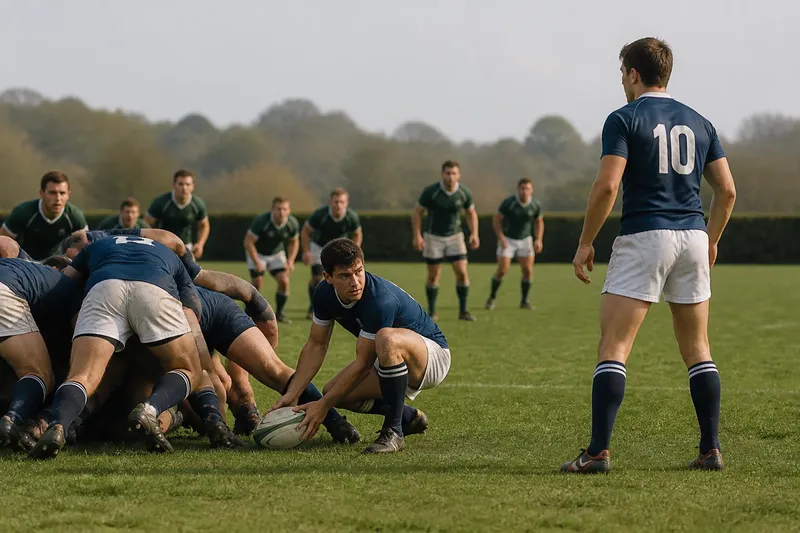
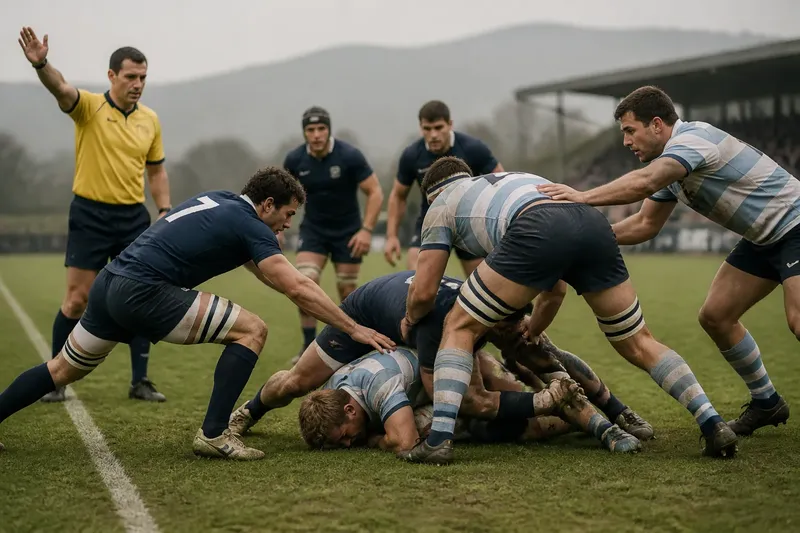
A ruck forms near the middle of the pitch. The scrum-half crouches beside the ball while the fly-half waits further out, looking across the advancing defensive line. Both are preparing for the next attack, but scrum-half or fly-half describes two different decisions, not simply two places on the field.
What must the scrum-half read at the ruck?
The scrum-half’s first concern is close at hand: whether the ball is available and what is happening around the ruck. They need to locate the ball, judge whether bodies are still obscuring it and notice a defender close enough to affect the pickup or pass. The immediate view matters more than a complete survey of the opposition.
That does not make the role a simple delivery service. The scrum-half chooses when and how to release the ball. A quick pass might keep the attack moving; a carry might exploit an opening close to the ruck. Either choice affects what the fly-half and nearby teammates can do next.
Information arrives in fragments: a forward’s call, a defender’s movement, a teammate’s position beyond the breakdown. The scrum-half has to use those cues without letting the ball remain trapped beneath bodies. A hurried decision can be as unhelpful as a slow one if the receiver is not ready.
How does the fly-half read the wider attack?
The fly-half is usually positioned further from the ball, with a broader view of the defensive line. They can assess whether defenders are holding their shape or drifting, and compare the space on either side of the contact area. Their job is not just to choose a receiver; it is to help shape the next phase before the ball arrives.
A fly-half might call for a forward to carry, direct a pass towards a supporting back or signal a kick if the available space and match situation make that suitable. The call has to fit the team’s alignment and the time the scrum-half has to act. An option that cannot be communicated in time is of little use.
The two roles therefore work with different immediate pressures. The scrum-half must judge the ball and nearby threats; the fly-half reads the approaching contest and considers what kind of contest the attack can create. Their decisions overlap, but they begin with different information.
How could one phase unfold?
Say a team has carried the ball to a ruck just inside the opposition half, left of centre. The ball is available. The defenders appear settled in the middle but less organised on the far side. A forward is nearby as a short option, and two backs are positioned outside the fly-half.
The scrum-half sees a defender approaching the near edge and checks that the ball is playable. Rather than delay while trying to direct the entire attack, they pass promptly to the fly-half. The fly-half sees a middle defender stepping towards the forward and calls the ball on to the next back, whose position offers a route beyond that defender.
In this invented situation, the outside back makes a clean carry and a teammate secures the next ruck. The result is a workable next phase, not a promised break or score. The scrum-half made the ball available to the attack; the fly-half used a wider view to direct where it went.
Now change one detail. If the outside backs are poorly aligned, a wide pass could leave the receiver isolated, so the fly-half might call for the forward instead. If a gap opens beside the ruck, the scrum-half could carry rather than pass. Neither player follows a fixed script: each responds to the current picture and to what teammates are ready to execute.
How do the two roles coordinate their calls?
The scrum-half and fly-half need a shared vocabulary that works amid noise and limited time. A short call can identify a receiver or signal a change; a hand gesture may help when voices are masked. The wording varies between teams. What matters is that the scrum-half understands the first option and the fly-half can adapt if the defensive picture changes.
Coordination also means allowing for new information. The fly-half may call one plan, then see a defender rush out. The scrum-half may notice that the ball is awkwardly placed or that a nearby defender has closed in. A useful partnership lets either player respond to those cues rather than treating the first call as an order that cannot change.
A pass can be accurate but poorly timed, or well timed but directed into a defence that is ready for it. The roles are best understood by the decisions each player is positioned to make, not by assuming that every attack must travel through the same pair of hands.
What should you watch in the next phase?
Follow the scrum-half before the ball leaves the ground. Notice how they locate it, where they look first and whether they pass or carry. Then watch the fly-half: look for a scan across the defensive line, a call to teammates and any adjustment as the defence advances.
- Check whether the scrum-half has a clear route to the ball; if bodies obstruct it, expect a delay or a change in how the ball is released.
- Check how close the nearest defender is; if they can pressure the base, the scrum-half may need to release promptly or choose a safer option.
- Check whether the fly-half has time to scan the line; if pressure arrives early, a simple call may be more workable than a developing move.
- Check whether receivers are aligned for the intended pass; if they are bunched or isolated, the attack may need to use another option.
- Check whether a defender changes direction after the call; if the route closes, the players may need to redirect the attack.
- Check whether the scrum-half and fly-half appear to share the same plan; if their movements differ, watch for a revised call or a simpler release.
A call that is abandoned can be revealing. If the fly-half begins shaping for a pass out wide but a defender closes the route, changing the plan may show that they have read the defence. The scrum-half’s awareness at the base can help give the attack time to make that adjustment.
What do readers ask about the scrum-half and fly-half?
Does the scrum-half always pass to the fly-half?
No. The scrum-half can pass to another player, carry or kick when the situation suits. The fly-half is often a central decision-maker, but not every phase has to run through them.
Is the fly-half the only player who calls the attack?
No. The fly-half often helps direct the line, while the scrum-half can call a quick option or change the release at the base. Other players also communicate what they see and what support they can offer.
Can one player cover both roles?
Some players can cover either position, though the demands differ. They must switch between close control around the ruck and a broader view of the attack’s shape.
Why can a fast pass still be the wrong choice?
Speed helps only when the receiver and the available space are ready. A hurried pass into a crowded channel can give the next player a more difficult problem.
Why is the difference about decisions, not distance?
The scrum-half’s view starts with the ball, nearby bodies and the time available to release it. The fly-half’s view starts with the defensive shape and the options it leaves open. Their positions often reflect those responsibilities, but distance alone does not explain the distinction.
When watching rugby, ask what each player notices and which decision gives the next teammate a workable choice. That is the clearest way to understand scrum-half or fly-half under pressure. It also helps explain why a change of plan, made before the defence closes the space, can matter as much as the pass that follows.