The Offside Line Moves: What to Watch at the Base of a Phase
Read the rugby offside line at a ruck by tracking the ball, rear feet and defenders’ movements, while allowing for what the camera cannot show.
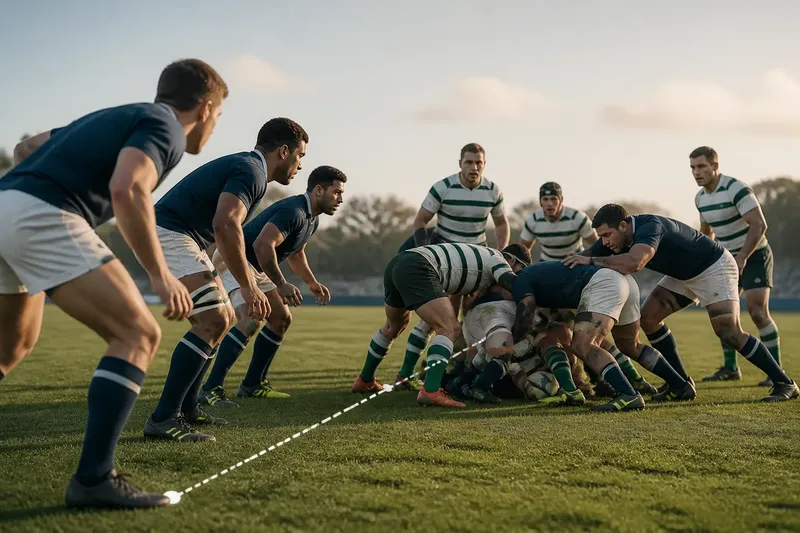
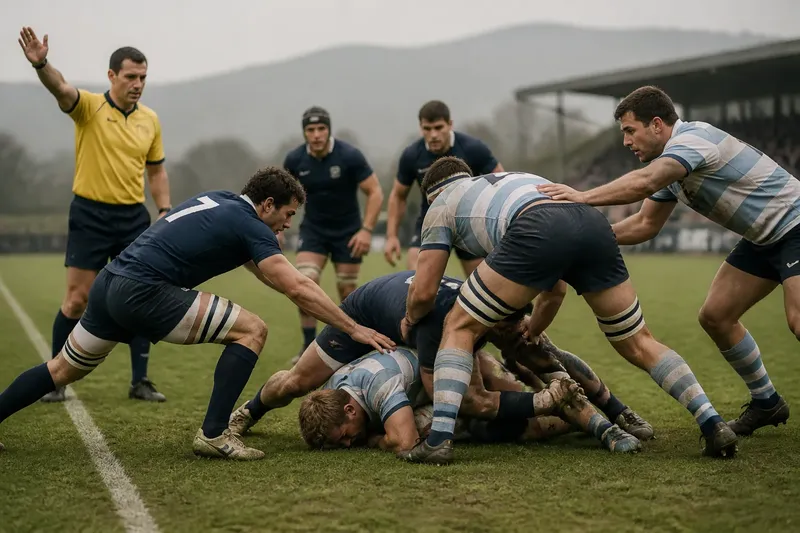
The attack gathers around a tackle, and the camera shows bodies, boots and the ball arriving from different directions. To read the rugby offside line at the base of a phase, watch where the ruck forms, then use its rear edge and the players connected to it as reference points.
This method is for watching a live match, not judging an incident from one camera angle. Each time play resets around a tackle, rebuild the picture rather than carrying the previous line forward.
Where should you start when reading the offside line?
Begin by locating the ball and asking whether it is still in the tackle area, has been gathered by a player, or has emerged from a ruck. Those are different pictures. A tackle by itself does not create the same offside line as a ruck, so the ball’s location is a clue, not a complete ruling.
Look for the referee’s position and movement as well. The official may be close to the breakdown, but a player’s position relative to the ball and ruck is what you are trying to read. A camera cut can make the ball seem to shift; use the players’ feet and bodies to keep your bearings.
How can you tell whether a ruck has formed?
A ruck forms when at least one player from each team is in contact, on their feet, over the ball on the ground. Once it forms, players who are not part of it must observe the offside line set by the ruck, subject to the applicable law provisions. For viewing, that line is generally associated with the hindmost part of the ruck on each team’s side.
Do not assume that every player standing over the ball is part of the ruck, or that every nearby player has joined it. Watch for contact with an opponent while players are on their feet over the ball on the ground. The rear feet of the last player in the ruck are often the clearest visible guide, though bodies can obscure them.
If no ruck has formed, do not draw one in your mind just because players are gathered around a tackle. The offside picture may instead depend on the tackle and the ball. Keep the distinction open until you can see what has actually happened.
What do the rear feet tell you?
Once the ruck exists, imagine a line across the pitch through its hindmost point on each side. That line changes as the ruck moves or players join and alter its rear edge. A defender who was onside a moment ago may need to adjust as the ruck advances; the old mark does not stay fixed at the tackle’s original spot.
Track one defender near the edge of the picture and compare their feet with the ruck’s rear feet. This is more useful than measuring them against the scrum-half, whose position can change quickly and does not define the offside line. If the defender retreats as the ruck shifts, note the adjustment before judging whether they have remained behind the line.
When may defenders move forward?
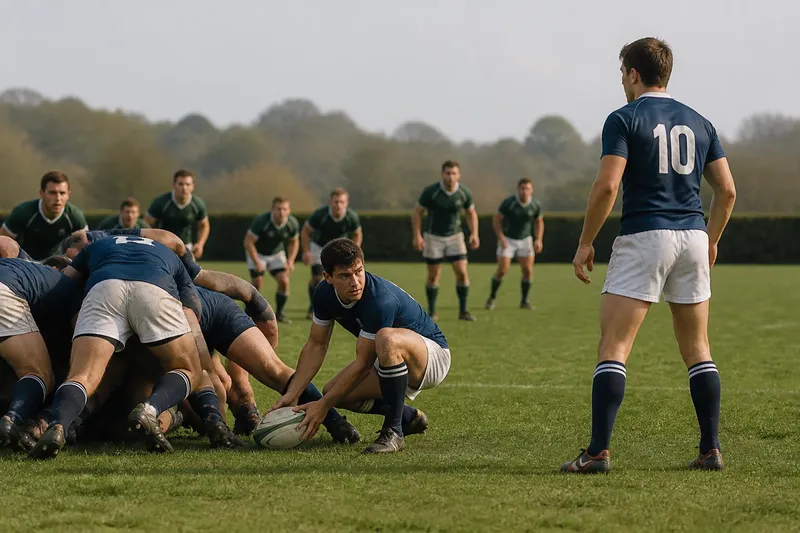
The scrum-half often stands close to the ball and may reach towards it, but proximity does not make that player the line’s anchor. While the ball remains in the ruck, the ruck’s hindmost point is the better reference for players subject to that offside line. A defender’s ability to advance depends on the ball being out and on the applicable law conditions; do not treat a movement near the base as proof that the ball has been played.
Watch for the ball to be clearly lifted or played away from the ruck. A defender’s advance that looked early while the ball was still there may be legal once it is out, while a player can also move too soon. Broadcast replays can help, but a view from behind the attacking team may hide the defender’s feet or the ball’s exact position.
How should you follow a defender’s position?
Position alone does not tell the whole story. A player may be in the right place because they were onside and moved forward at the appropriate time, or because they retreated behind the line before rejoining play. Another may appear level with a teammate yet be offside because they started ahead of the relevant line.
For each defender you are watching, ask where they were when the ruck formed and what they did afterwards. Their route back matters. A player who starts offside does not become onside simply because the ruck moves past them; they generally need to retreat behind the relevant line before taking part, subject to the law’s specific provisions.
How do you reset the picture after a new tackle?
After the ball is played from the ruck, an ensuing tackle can create a new breakdown and a new reference point. Do not keep using the previous ruck’s rear feet once a new contest forms. Find the ball again, see whether a ruck forms, then locate its rear edge.
Say you are watching an invented replay in which the attack moves the ball one pass to the left after a ruck. You first note that the ball has been played away, then follow the pass to the next tackle and check whether a new ruck forms. If it does, you use that ruck’s rear feet as the next reference; the result is a separate reading for each phase, rather than one judgement based on where the defender appears at the end.
What should you check when the picture is unclear?
Does a tackle create an offside line by itself?
No. A tackle and a ruck are distinct situations, and the applicable line depends on what has formed around the ball. First establish whether players from both teams are on their feet and in contact over the ball on the ground.
Where is the offside line at a ruck?
For players not participating, it is generally associated with the hindmost point of the ruck on their side. Use the last feet you can see as a viewing aid, while remembering that the referee has the full context and the camera may not.
How can you tell whether the ball is out?
Look for the ball being lifted or played away from the ruck, rather than relying only on a scrum-half’s reach or a defender’s movement. If bodies hide the ball or the moment it leaves is unclear, treat the timing as uncertain.
What if a player is obscured by the ruck?
Do not infer their position from a teammate’s movement or the camera’s apparent angle. Follow the next clear view, the referee’s signal and any replay that shows both the player and the rear edge; if those details remain hidden, treat the call as uncertain.
How certain can a broadcast view make you?
Offside calls can turn on timing and a foot hidden behind a body. A television angle may flatten the space between players, while a wide shot makes the ball difficult to locate. Avoid treating a frozen frame as conclusive if it cannot show whether the ball was still in the ruck or whether a player was retreating.
It is not worth trying to track every defender at once. Choose one visible player near the defensive line, follow their feet against the ruck’s rear edge, then widen your attention when the ball is played. That modest focus can make the moving line easier to read without turning an uncertain camera view into a certain breach.
The rugby offside line is easiest to read as a sequence of landmarks, not a permanent stripe on the grass: the ball establishes the moment, the ruck’s rear edge gives a reference, and each new phase asks you to locate both again. Keep those details in view, and the defence’s rush becomes easier to understand, even when the broadcast cannot show every foot.