Width or Territory? The Trade-Off Behind a Kick to Space
A rugby kick to space can change who controls the next phase. Learn to read the receiver, chase and field position before judging the choice.
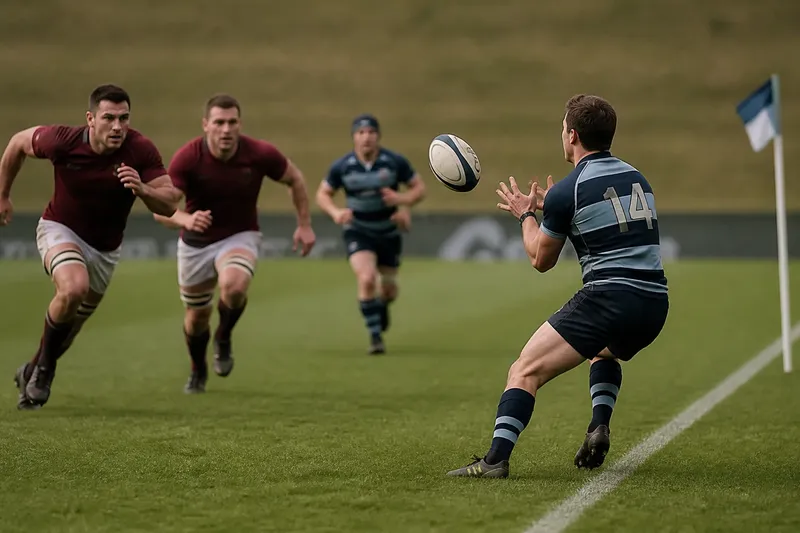
The full-back has drifted infield, a wing is holding the far touchline, and the ball sits with a player who has time to look up. In that moment, a rugby kick to space is not simply a choice between attack and territory. It changes the shape of the next phase: one side must gather, return or defend, while the other prepares for whichever answer comes.
To read that decision, set aside the usual contrast between stretching a defence with wide passing and sending the ball beyond it. The more revealing question is what the kick does to the receiving side’s immediate options. Where can the catcher move? Can a teammate offer a pass? Is a return kick available, and who will cover it?
What does a kick to space make the receiver decide?
Start with the receiver rather than the ball’s apparent destination. A kick into a channel may arrive in front of a player facing upfield, behind someone who must turn, or near the sideline where the next movement is constrained. Those are different problems, even if the ball travels a similar distance.
Look for the receiver’s body position and nearby support. A catcher facing the field with a teammate in reach can run or pass with little delay. Someone turning towards their own goal line may need to secure the ball before choosing a route, while a player isolated near touch has fewer directions available.
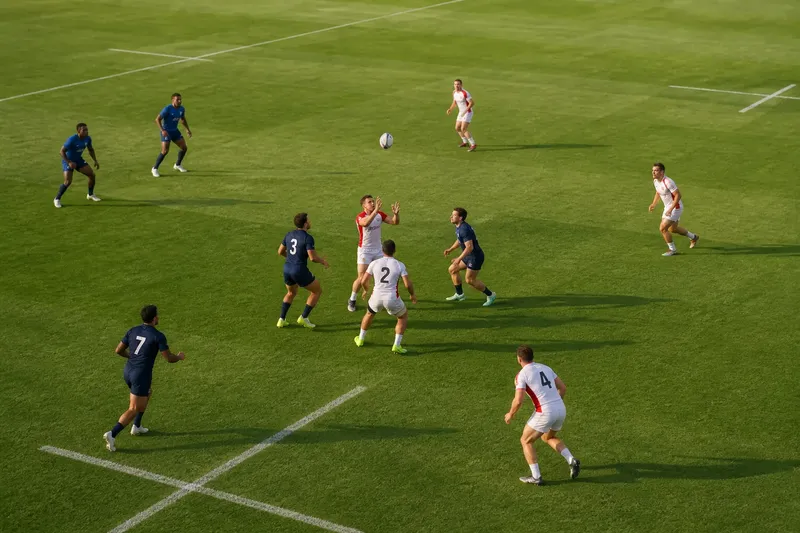
Then watch the kicking team’s alignment. Chasers may be positioned to close the receiver’s route, while teammates behind them prepare for a short return or a loose ball. The kick is not defined by a single sprint; it is shaped by the positions that remain once the ball comes down.
How does field position change the trade-off?
From deep in its own half, a team may want the next phase to begin farther from its goal line. A kick can move the point of pressure, but the receiving side still has the choice to run the ball back. The useful question is whether the kick changes that side’s starting picture, rather than whether it simply travels far.
Higher upfield, a kick behind the defensive line can make defenders turn and reorganise. The kicking team may be seeking a difficult gather, a hurried return or a chance to contest the ball. If the receiving team collects it facing forward with support close by, the same decision may instead produce a clean counterattack.
The score and time remaining can also affect what each side is willing to risk, but avoid treating any field position as a fixed rule. A team under pressure may keep possession to settle play; another may kick because its support is poorly placed to continue the attack. Read the arrangement in front of you, not a supposed universal formula.
What should you track from kick to next phase?
Follow the receiver, the nearest chasers and the space behind the chase. Those three points explain more than the ball’s flight on its own. The receiver shows which options are open; the chasers show whether there is time to use them; the players behind indicate whether a return can be contained.
- Receiver’s stance: If the catcher can face upfield, expect a run or pass to remain available; if they must turn or reach awkwardly, watch for a slower gather and adjust your reading of the pressure.
- Nearby support: If a teammate is close enough to offer a pass, look for the receiver to move the ball; if the catcher is isolated, watch for a kick back or an attempt to carry into contact.
- Chase shape: If several chasers approach with support behind them, expect the receiver’s time to narrow; if one chaser is separated from the others, watch for the catcher to exploit the gap.
- Cover behind the chase: If players remain in position to meet a return, the kicking side can challenge further upfield; if that space is unguarded, expect the receiving team to look for a counter through it.
- Distance from touch: If the ball arrives close to the sideline, watch for the boundary to limit the receiver’s route; if it lands centrally, expect the receiver to have more directions in which to run or pass.
- First contact: If the catcher secures the ball cleanly, assess the next pass, run or kick; if the ball spills or bounces loose, watch which side has players arriving in position to gather it.
Say a side has the ball in its own half, with the opposition’s backfield deep and a winger standing near the far touchline. Imagine the kicker sends a low ball into the channel behind that winger. Two chasers move forward together, and one teammate stays deeper. The expected result is a receiver turning towards touch with the chase arriving, while the deeper player can cover a return; if the winger gathers facing the field before pressure arrives, the kicking side must instead defend the counter.
This invented situation makes the trade-off visible without assuming the kick will succeed. The intended effect is a constrained next choice, not necessarily a recovery of possession. If the catcher has time, support and an open route, the kick has given the other side a different kind of opportunity.
Which questions help explain a rugby kick to space?
Why kick behind the receiver instead of towards them?
A ball behind a receiver can require them to turn before they move forward, changing their posture and the time available to choose a return. If the ball instead arrives in front with support nearby, the receiving side may be able to keep attacking immediately.
Does a longer kick always create a better result?
No: the receiver’s position, support and route out matter alongside distance. A kick that travels farther but gives the catcher time and open field can create a more comfortable next phase for the opposition.
What makes the chase relevant?
The chase affects how much time and room the catcher has after gathering the ball. A connected group can limit the available routes, while a lone chaser may leave an opening that the receiver can use.
What should you watch after the catch?
Watch the catcher’s first action and the players positioned for the next contact. A pass, carry or return kick reveals which option remained open, while the other team’s response shows whether it had prepared for that answer.
When is detailed tactical decoding not worth the effort?
Not every kick needs an elaborate explanation. An awkward bounce or a hurried clearance may reflect the immediate pressure more than a carefully designed pattern. It is not worth trying to infer a hidden plan from one odd bounce; note who adapts first and what the next phase permits.
For a rugby kick to space, the useful reading is often modest: identify the receiver’s posture, the support available, and the route each side can take next. That keeps attention on observable choices rather than guessing what a player intended. A kick’s meaning becomes clearer once the receiving team acts and the kicking team’s response comes into view.