Why Rugby Sevens Feels Like a Different Use of the Pitch
Rugby sevens uses the full rugby pitch with fewer players. Learn to read restarts, support, defensive shape and the changing demands of each passage.
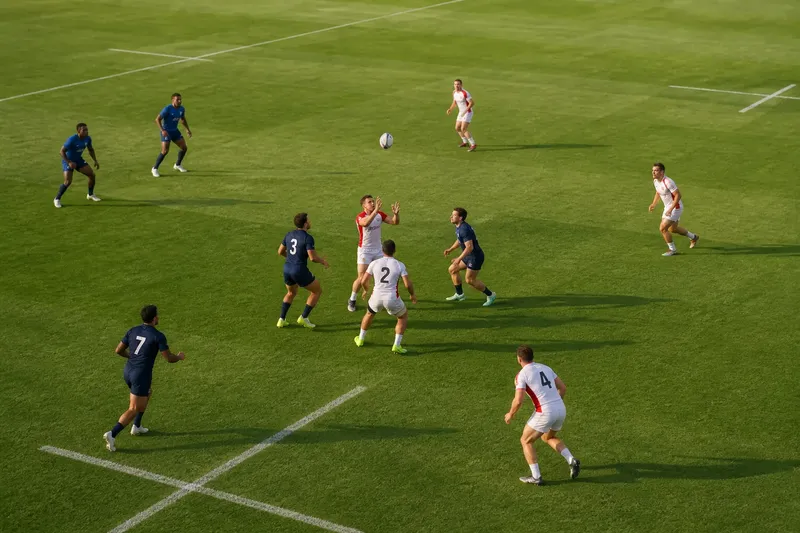
At a sevens restart, the ball hangs above open grass while a small group of players gathers beneath it. Rugby sevens uses the full-sized pitch, but seven players per side must cover it. That contrast shapes the contest: the first question is often not where the ball will go, but how the teams organise themselves around it.
Sevens is not simply fifteen-a-side rugby played at a quicker pace. Fewer players alter the demands of support, defensive organisation and recovery after a tackle or turnover. For a spectator, following those changes reveals why the same pitch can produce such different passages of play.
Why does the full pitch feel so exposed?
The boundaries do not change between sevens and fifteen-a-side rugby. What changes is the number of players available to contest and protect the ground between them. In sevens, a defender may have to choose between staying connected to teammates and closing down an opponent in front of them.
That choice can leave a temporary gap, but not every gap is an invitation to pass. The ball carrier still needs time and support, and defenders can move across as the attack develops. Watch the spacing between nearby players rather than treating empty grass as an automatic route forward.
A missed tackle can make the next moment especially unsettled. The defending side may have to recover a player and reorganise, while the attack decides whether to continue immediately or secure the ball first.
What does support look like after a tackle?
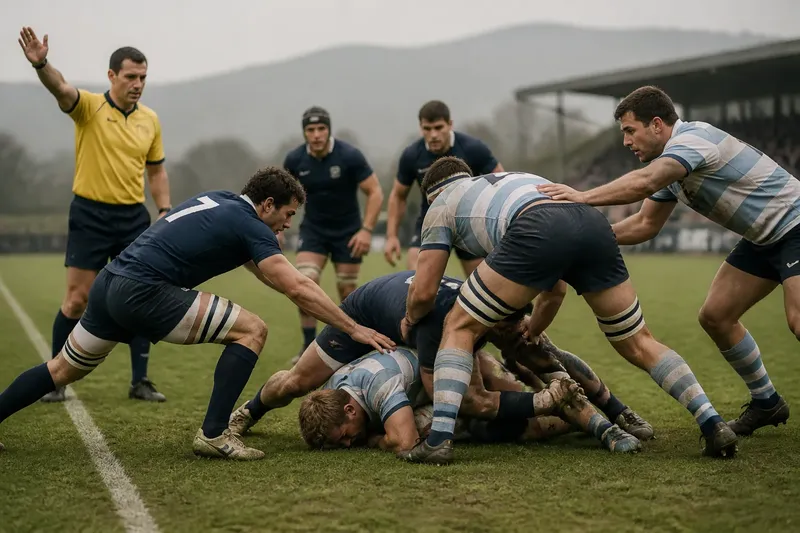
In a tackle, the carrier goes to ground and teammates must be close enough to contest or retain possession. A support runner arriving in time can help keep the ball available; a runner who is too far away may leave the carrier isolated. This makes the distance between the ball and the nearest teammates a useful detail to follow.
Support is not always a line of players running towards the carrier. One teammate may stay close to protect possession while another moves into a position to receive the next pass. Their roles can change as the defence approaches, so a quick glance at the players behind and beside the ball often explains the next decision.
Say you are watching an invented passage in which a carrier is tackled near the centre of the pitch, with one teammate close by and another farther away. The close teammate secures the ball while the second moves into space; the expected observable result is a stable next phase with a passing option, rather than a risky attempt to play the ball before support arrives.
How do teams recover between passages?
When possession changes or a tackle ends a run, players may be spread across the pitch rather than arranged in a settled line. They need to find useful positions while still watching the ball. The team in possession may try to play promptly; the defence must decide who closes down and who stays connected to cover other routes.
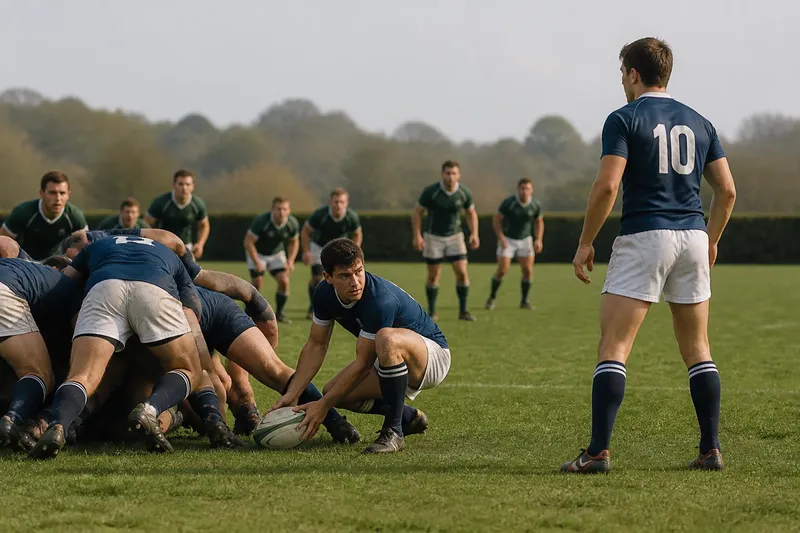
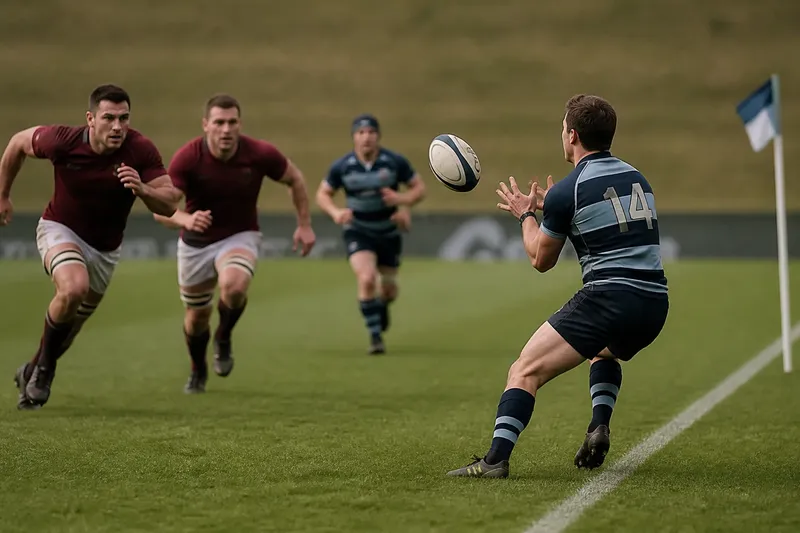
Restarts create another sudden change in organisation. Both sides arrange themselves to contest the ball, and its landing can determine who has time to form an attack. A clean catch gives the receiving team a chance to set its next action; a loose ball can leave both sides scrambling to establish possession.
The rhythm comes from these shifts between open running and close contests for the ball. Passing is only one option. A team may carry, pause to secure possession or kick, depending on the players’ positions and the pressure in front of them.
What should you look for in a sevens passage?
Use the nearest players as a guide, then widen your view when the shape changes. Each observation points to a question, not a prediction:
- If the nearest support runner is close to the carrier, check whether they are in a position to help secure the next phase; if not, the carrier may need to protect possession rather than play the ball immediately.
- If a teammate is moving into a useful receiving position, watch whether the carrier can reach them safely; if the passing route is blocked, the carrier may need to retain the ball or choose another option.
- If a defender is still recovering from a missed tackle, notice whether another defender has covered their position; if the line remains unsettled, the attack may continue, while a restored line may call for a more patient phase.
- If the ball is contested at a restart, follow which side gathers it cleanly; if neither side secures possession, expect both teams to reorganise around the loose ball rather than assume an immediate attack.
- If a team has just lost possession, look for players returning to defensive positions; if they remain spread out, the side may need to delay its challenge and reconnect before pressing.
- If the ball carrier is isolated from nearby teammates, check whether support can arrive before the defence; if it cannot, protecting possession is a more plausible choice than forcing a pass.
It is not worth trying to track every player across the full pitch during a rapid exchange. Pick the carrier, the nearest support player and the defender closest to the ball. Those three movements usually make the immediate contest easier to read.
What do readers often ask about rugby sevens?
Is the pitch smaller in rugby sevens?
No. Sevens uses the full rugby pitch, with the same boundaries as fifteen-a-side rugby. The difference is that fewer players are available to cover it.
Why does support matter so much?
Support players help the carrier retain possession and provide options for what happens next. Their position can determine whether the team can play promptly or needs to secure the ball first.
Why can a missed tackle change the shape of play?
The defence may need to cover for a player who has been beaten while also tracking the ball and nearby attackers. The team’s response depends on whether another defender can fill the space and reconnect the line.
What should a new spectator follow first?
Follow the carrier, the nearest teammate and the closest defender. Notice whether support is arriving and whether the defence is recovering its shape; those details clarify the immediate choices.
Rugby sevens becomes easier to read when you watch how players recover and support one another, not only where the ball travels. At the next restart, follow the first player who gathers the ball and the teammate who gives them a usable option; that small exchange often sets the terms of the passage that follows.