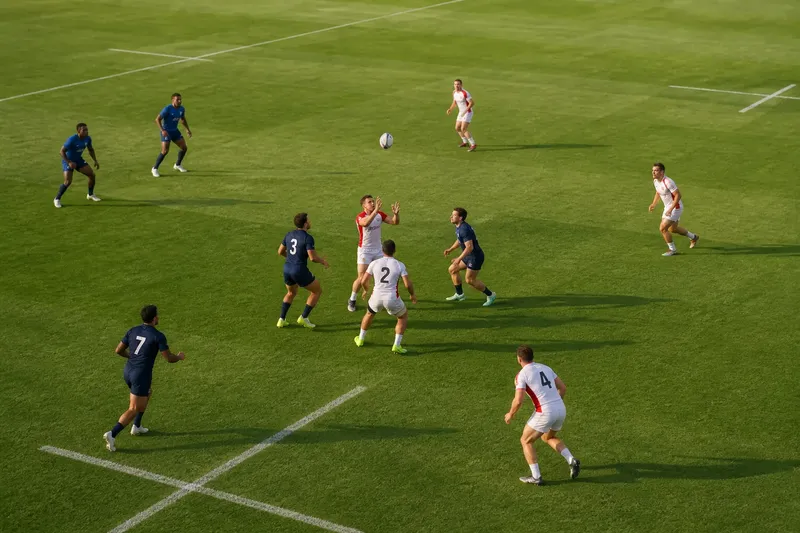
Why the Ball Is Sometimes the Least Important Part of a Ruck
Understand ruck laws by tracking how players arrive, bind and compete, so a hidden ball and a sudden whistle are easier to read.
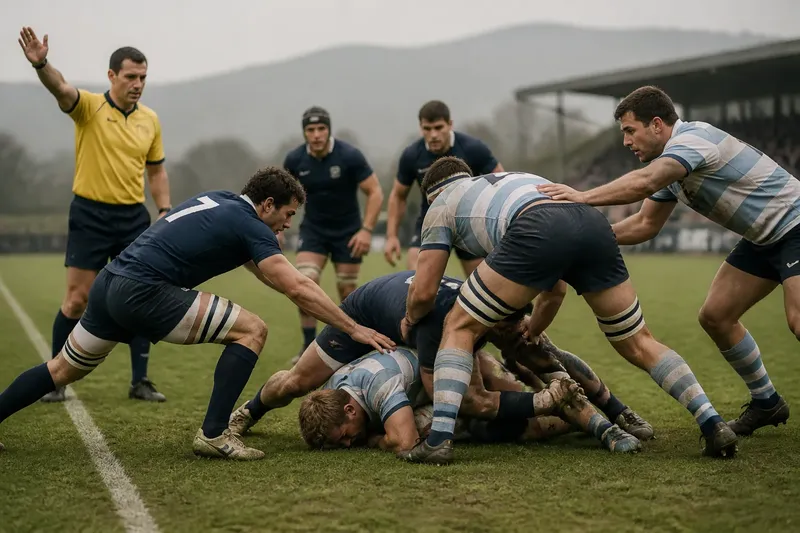
A ball carrier goes to ground, two opponents close in, and the ball disappears beneath boots and jerseys. To understand a ruck penalty, it helps to watch who arrives and how they join, not just the small patch of ball still visible.
Why can the ball disappear from the decision?
Under World Rugby’s Laws of the Game, a ruck forms when at least one player from each team, on their feet and in physical contact, come together over the ball on the ground. That definition matters: a tackle and a ruck are related phases, but they are not the same contest.
Before a ruck forms, players may be able to play the ball with their hands if they meet the laws applying to the tackle situation. Once a ruck has formed, players generally must not use their hands to play the ball. The laws contain specific exceptions, so a close call can depend on the exact sequence and applicable law.
The referee is therefore judging more than whether a player touched the ball. They may need to decide whether a ruck existed at that instant, whether a player entered correctly, and whether that player remained on their feet and bound as required.
Why does a close arrival still draw a penalty?
Players joining a ruck must do so from behind their own offside line and in accordance with the ruck laws. Moving around the side to reach the ball can be illegal even if the player does not touch an opponent. A broadcast view that makes the route look straight may not show the full approach.
Binding is also part of joining legally. The laws specify how a player must bind to a team-mate or opponent, and they include requirements for a player who joins from behind the hindmost team-mate. A player who merely leans over the bodies has not necessarily joined the ruck lawfully; the precise ruling depends on the player’s position and actions under the current law.
Watch the arriving player’s feet and shoulders as well as their hands. Did they come from behind their side, stay on their feet, and bind as required? If not, a seemingly ordinary attempt to compete may involve an infringement before the ball is touched.
When can a player use their hands at a breakdown?
Not every breakdown becomes a ruck. If the requirements for a ruck have not yet been met, the situation may still be governed by the tackle laws, including the obligations on the tackled player and those arriving. A player’s right to handle the ball cannot be judged from posture alone: the referee must assess the phase and the player’s position.
Once a ruck has formed, the general rule is that players must not handle the ball in the ruck. The laws provide limited exceptions, including circumstances involving a player who is already on their feet and has their hands on the ball before the ruck forms. Whether an exception applies is a matter of the exact timing and wording of the current laws.
If the ball has clearly left the ruck, players may play it again subject to the laws that apply at that moment. A glimpse of the ball beneath a boot does not by itself establish that it is out or available. Referees judge whether it has emerged from the ruck, not simply whether someone can see or touch it.
What should you check when a breakdown looks wrong?
- Check whether a ruck has formed. Look for players from both teams, on their feet and in contact over the ball. If those conditions are not visible, consider whether the tackle laws may still govern; if the view is blocked, wait for another angle or the referee’s explanation.
- Trace the player’s route. If they arrive from behind their own offside line, continue checking how they join; if they come around the side, the entry may be illegal, so look for the referee’s signal or call.
- Check their feet and balance. If the player stays on their feet while joining, assess the bind and other requirements; if they fall or dive into the contest, look for an infringement under the relevant ruck law rather than treating them as a standing competitor.
- Watch for a lawful bind. If the player visibly binds as required, check the rest of their action; if they only lean across without joining as the law requires, consider that as a possible reason for the penalty.
- Follow the hands in time. If the ball was touched before a ruck formed, consider the tackle laws and any other applicable restrictions; if it was handled after formation, check whether a specific exception or the ball being out applies.
- Decide whether the ball is out. If it has clearly emerged from the ruck, assess whether the next player is otherwise entitled to play it; if it remains trapped beneath bodies or feet, do not infer availability from a small visible patch—watch for the referee’s call.
- Listen for the infringement named. If the referee signals an entry, binding or hands offence, relate the call to that action; if the precise offence remains unclear, replay the whole arrival rather than judging from the whistle alone.
These checks help explain what may have happened; they do not replace the law book or a referee’s decision. The World Rugby laws, competition regulations and current guidance should be consulted for a technical dispute, since provisions and interpretations can be specific to the situation and competition.
How can you read a confusing ruck penalty?
Say you are watching an invented match sequence: a carrier is tackled near the touchline, a defender approaches from the side and reaches down, then a team-mate binds onto the carrier’s support player. The referee whistles. First, note the defender’s route; next, identify whether opposing players had already come together on their feet over the ball; then check when the defender’s hands moved towards it. If the ruck had formed before the reach, the hands may explain the call; if it had not, the route or another tackle-law restriction may still matter. The result is not a certain diagnosis from the scene alone, but a clearer set of possible reasons to compare with the referee’s signal.
If the sequence remains unclear, watch it again at normal speed before slowing it down. Slow motion can separate events that happened almost together and make a brief touch seem more deliberate than it was. Ask what contest existed at the moment of the action, and how the player entered it.
What questions help explain a ruck penalty?
Can a player pick up the ball before a ruck forms?
Possibly, if the ball is available and the player is entitled to play it under the laws applying to the tackle situation. The key question is whether the conditions for a ruck had already been met.
Can a player use their hands after a ruck forms?
The general rule is no, but the laws set out limited exceptions. Check the current wording and the timing of the action before judging a close incident.
Why might a player be penalised for entering from the side?
A player must join from behind their own offside line and meet the requirements for joining the ruck. Going around the side to get closer to the ball can breach those requirements, even without an obvious collision.
Does every player at a ruck have to bind?
Players who join a ruck must bind in the manner required by the laws; simply leaning over the contest is not automatically a lawful way to join. The applicable detail depends on the player’s position and action, so consult the current law for a disputed technical ruling.
What is not worth the effort?
It rarely helps to decide from one frozen frame that the ball was obviously available or that a player was obviously onside. A still image removes the approach, the contact and the instant when a ruck may have formed. Those details often determine which law applies.
For a technical dispute, consult the current World Rugby laws and the competition’s regulations, or ask a qualified referee or coach. For ordinary viewing, track the arrivals first: the ball may be hidden, but the players’ route, balance and timing can still make the decision easier to understand.